A clear technical guide to how Maltogenic Amylase interacts with wheat starch during baking to support crumb softness, resilience, and extended eating quality.
Packaged bread loses sales value when the crumb firms before the end of its shelf life: slices feel dry, buns crack when folded, and stale returns come back from retail. Maltogenic amylase is the enzyme industrial bakeries and bread improver blenders use against that problem. This page explains, in plain terms, what it does to the starch in your dough, what that means for the finished product, and what to check when you buy it.
The short version: maltogenic amylase works inside the gelatinized starch during the bake and leaves the crumb less able to firm up after cooling. The result is not only a softer loaf on day one but a slower loss of softness through distribution, retail display and the customer's kitchen.
Buying in bulk? Maltogenic Amylase Solutions supplies maltogenic amylase wholesale to bakeries, improver and premix blenders, and ingredient distributors. Send your product, quantity and destination country and we quote per order. Request a quote
Wheat flour starch is made primarily of two structures:

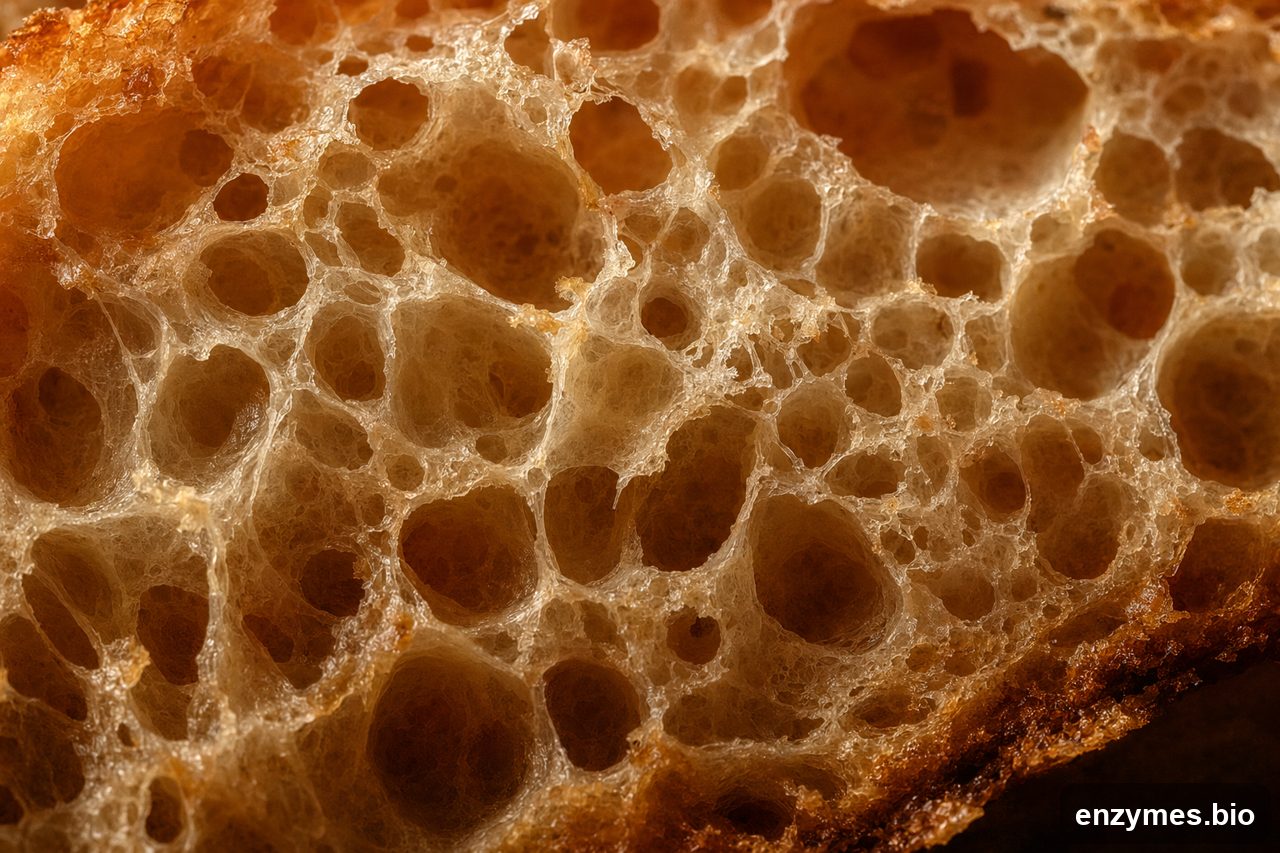
In the oven, heat and moisture transform starch. Granules swell and gelatinize, creating a hydrated network that contributes to crumb set. After baking, that network begins to reorganize. Water migrates. Starch chains reassociate. The crumb becomes firmer, drier in perception, and less elastic under bite.
Maltogenic Amylase helps slow this process by modifying accessible starch chains during the baking window.
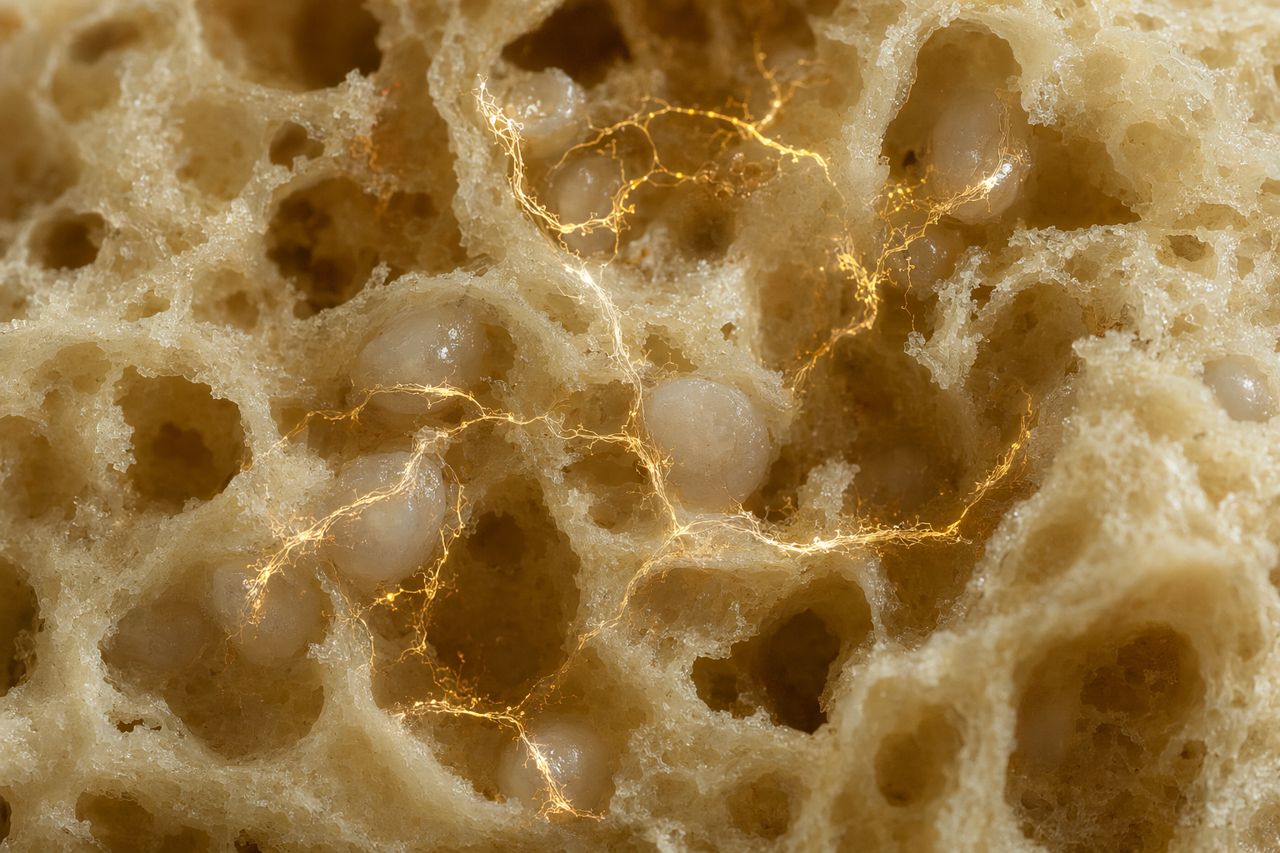
Maltogenic Amylase hydrolyzes selected alpha-glucan linkages in gelatinized starch, producing smaller maltose-rich carbohydrates and related dextrins. In practical bakery terms, it gently reshapes the starch fraction rather than aggressively thinning dough.
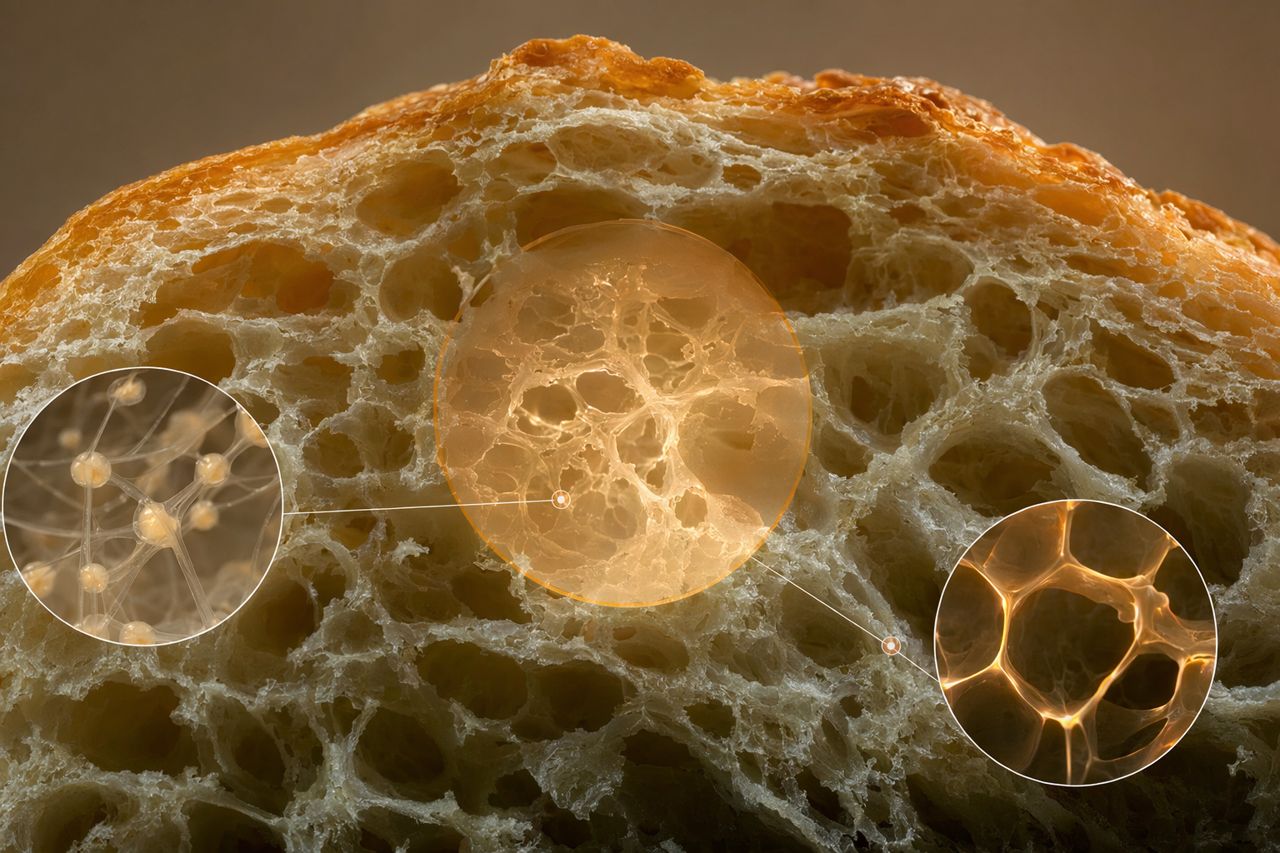
Its key contribution is in the amylopectin-rich part of the starch system. By shortening certain side chains and generating smaller soluble carbohydrates, Maltogenic Amylase reduces the ability of starch chains to align and recrystallize after baking.
That matters because starch retrogradation is one of the main drivers of crumb firming. When the retrogradation pattern is moderated, the crumb can remain more pliable, springy, and pleasant over shelf life.

Maltogenic Amylase is most relevant after starch becomes hydrated and accessible. In a typical bread process, its functional window opens as dough temperature rises and starch begins to gelatinize. The enzyme then acts during baking until heat progressively limits activity.
This heat-sensitive behavior is part of why Maltogenic Amylase can be effective in bread systems. It performs during the moment when starch is most available, then is naturally controlled by the baking process.
For formulators, that means performance depends on the whole system, not the ingredient name alone:
When properly matched to the formula and process, Maltogenic Amylase can support:
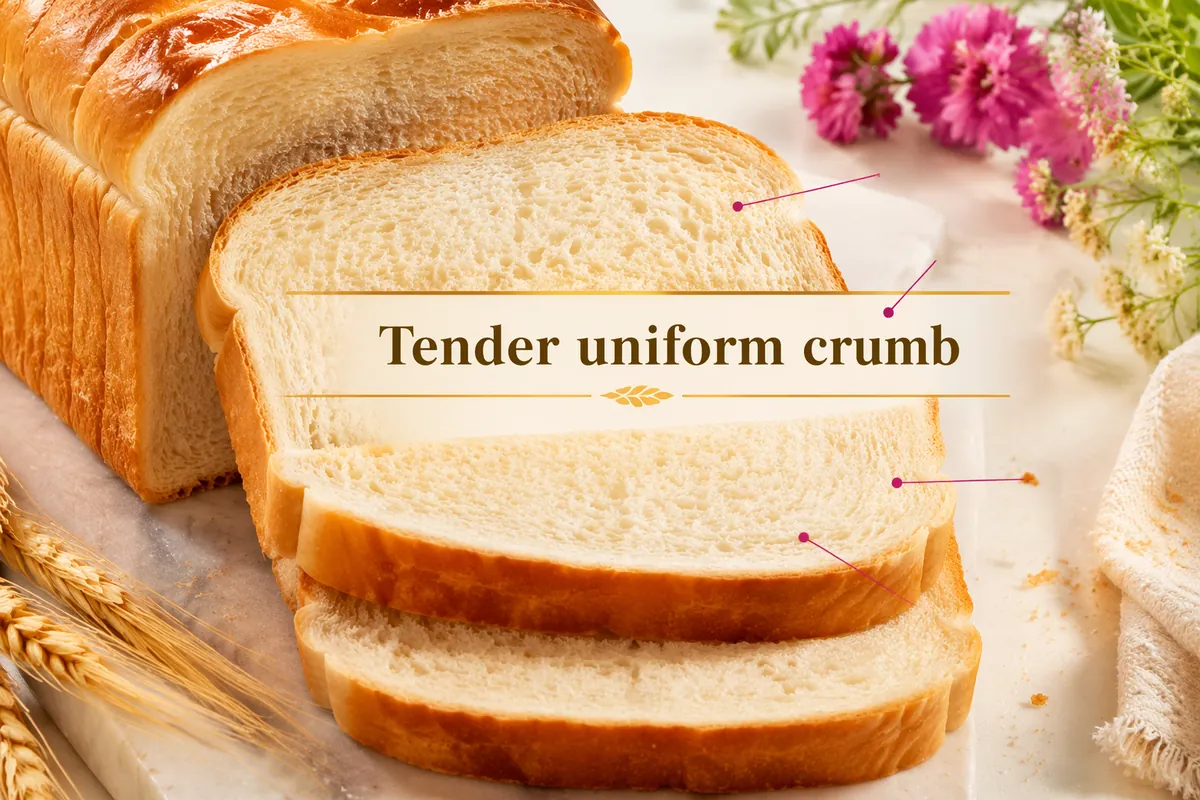
The sensory effect is often described as a crumb that feels more supple, less brittle, and less prone to early firming.
Maltogenic Amylase is not a universal fix for every staling problem. It does not correct underbaking, weak gluten development, poor hydration balance, or packaging that allows excessive moisture loss. It also should not be treated as a way to mask unstable formulation choices.
Used well, it is a precision tool: one component in a starch-management strategy.
Maltogenic Amylase is commonly considered for bakery applications where softness retention is commercially important:
Supports slice softness, foldability, and resilience during multi-day ambient shelf life.
Helps maintain a tender bite and reduces the rapid firming that can occur after production and distribution.
Can help protect a softer eating profile in formulas containing sugar, fat, dairy solids, or inclusions.
Supports flexibility and reduces cracking or brittle texture where product handling is important.
May support better post-bake softness when used as part of a complete process strategy, though freeze-thaw and bake-off conditions must be evaluated carefully.
Maltogenic Amylase should be evaluated in the actual flour system and process conditions intended for production. Small formulation changes can shift performance because starch accessibility, water availability, and heat profile all affect the final outcome.
During development, teams often compare:
The strongest programs evaluate both instrumental texture and sensory bite. A loaf can test soft but still eat pasty, weak, or wet. The goal is not softness alone. The goal is controlled softness with clean chew, stable structure, and a premium crumb impression.
A straight grade contains maltogenic amylase as the only enzyme. Typical values for a bakery grade:
Two points follow for a buyer. First, the dose is always tied to the activity of that specific grade, so a dose from one supplier does not transfer to another; ask for the recommended range of the grade you are quoted. Second, a straight grade suits bakeries and blenders that build their own improver; a bakery that wants a single addition is better served by a ready-made improver blend that already contains it.
To get a useful quote rather than a generic price list, tell us:
Pricing, pack format and lead time are quoted per order.
A premium crumb is engineered, not guessed. Maltogenic Amylase works because it addresses the physical chemistry behind bread staling: starch chains reorganizing after bake. By moderating that reorganization, it helps preserve the sensory qualities buyers notice first — softness, spring, fold, and freshness perception.
For industrial bakeries, the opportunity is measurable: less early firming, more consistent shelf-life quality, and a better eating experience from first slice to last.
Maltogenic Amylase Solutions supplies maltogenic amylase in bulk to bakery manufacturers, improver and premix blenders, and ingredient distributors. Use the inquiry form on this page with your product, quantity and destination country, and we reply by email with a quote, and we tell you which documents are available for that grade. Request a quote
Tell us your application and volume — we reply with pricing and lead time.
We have received your message. We will reply by email.